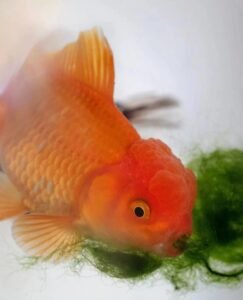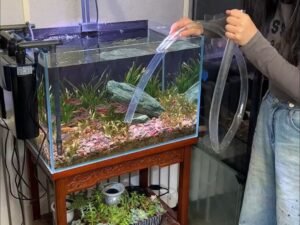
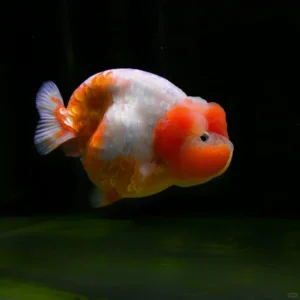
Lighting can transform a plain aquarium into a vivid, lively underwater scene. Most aquariums use fluorescent tubes or high-power hanging lamps to create artificial light. Plants cannot grow without light, and goldfish display their best colors under proper illumination.
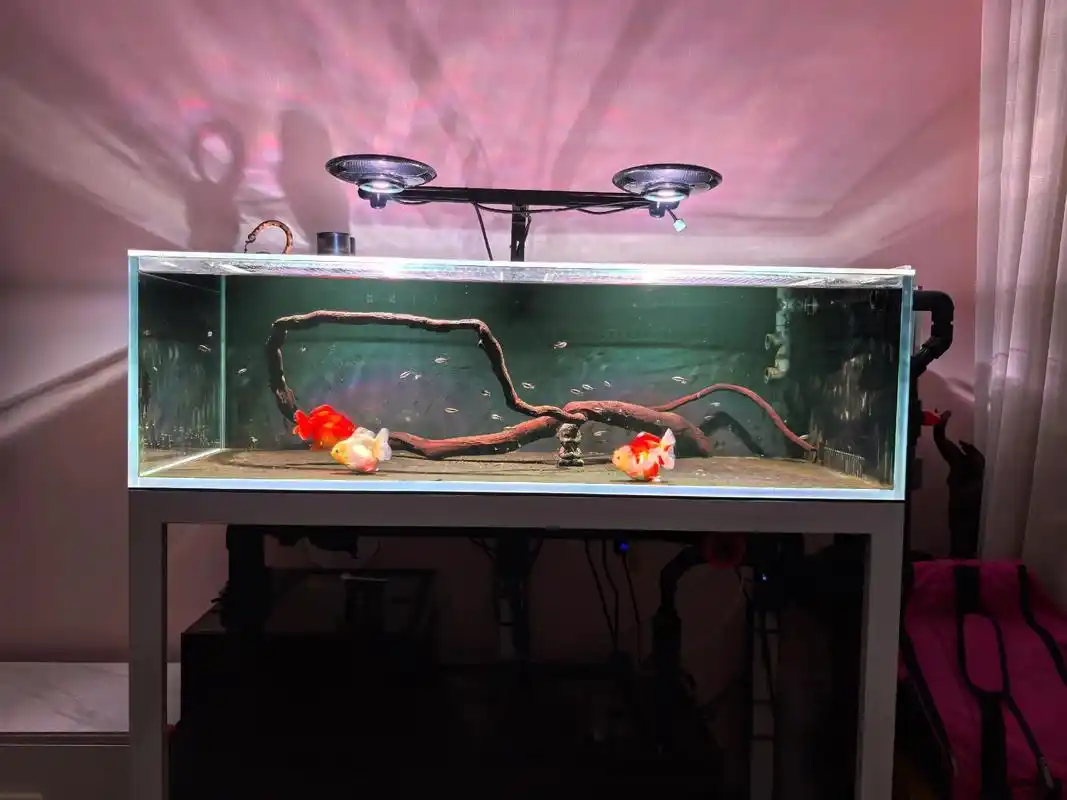
1. How Long Should Aquarium Lights Stay On?
Goldfish are different from loaches or catfish that prefer dawn and dusk. They are naturally active in bright daylight. For healthy growth, goldfish need 10–12 hours of daytime lighting followed by consistent nighttime darkness.
However, goldfish can also adapt to your schedule. If you work night shifts or stay up late, you do not need to wake up multiple times during the day just to feed them. As long as temperature and lighting are stable, you can turn on the lights at night, feed your goldfish between 7:00 p.m. and 5:00 a.m., and let them rest during the day—just like you do.
After all, fishkeeping should be relaxing and enjoyable, right?
2. Types of Aquarium Lighting
Fluorescent Lights
Fluorescent lights are the most common lighting option for goldfish tanks. Modern versions designed for aquariums are often called full-spectrum fluorescent lamps. They simulate bright midday sunlight and create a clear, vibrant environment. Aquatic plants grow better under this type of light, and their leaves look more vivid.
Fluorescent bulbs have a long lifespan (several thousand hours) and offer high brightness relative to power consumption. They also generate less heat than incandescent bulbs, making them suitable for installation inside aquarium hoods.
Metal Halide Lamps
Metal halide fixtures use halogen bulbs with deep parabolic reflectors. They are beautiful, high-intensity lights that produce concentrated beams and excellent viewing effects. Because they generate significant heat, they are usually hung 40 cm above the tank and equipped with UV-filtering glass covers.
Metal halides are more common in planted tropical aquariums, where strong light is essential. Large planted tanks often require multiple fixtures. But for typical goldfish aquariums without dense live plants, metal halides can cause aggressive algae growth and are usually not recommended.
LED Aquarium Lights
Traditional bulbs emit light in a full 360° pattern and rely on reflectors to improve efficiency. LEDs naturally emit around 180°, so even without reflectors they offer higher usable light. With lenses or reflectors, efficiency increases further.
LEDs are compact, lightweight, long-lasting, safe, and durable. They offer a wide range of wavelengths, making it easy to create lighting environments tailored to specific plants and animals. Their narrow spectral width also allows precise color mixing for pure or blended light outputs.
Other Light Types
Fluorescent tubes come in different colors to simulate various underwater environments. Pink or deep-red tubes are popular because they enhance red tones, making red goldfish appear more vibrant.
However, red is only one of many natural goldfish colors. Healthy goldfish already display vivid coloration under white, daylight-spectrum lighting. Strong colored lights can make them look unnatural and may distort the appearance of multicolored fish (e.g., calico goldfish may look dull purple or muddy brown under deep-red lighting). Using only colored tubes can make the tank look artificial.
One exception is the actinic blue “moonlight” tube, which simulates moonlight with a soft, deep-blue glow. It is mainly used for marine tanks with deep-sea corals, but it can also create a calm nighttime mood in a goldfish tank. Goldfish colors will not show under this light, but the peaceful nighttime ambience is charming.
3. Which Light Causes the Fastest Algae Growth?
All aquarium lights except UV sterilizers can grow green algae. The only difference is how fast algae appear. Under the same conditions, algae growth speed from fastest to slowest is:
-
Metal halide lamps
-
High-power LED lights
-
Fluorescent lights
-
Regular LED lights
For quickly growing green algae (“green water” or “green spot algae”), a warm-yellow light at 4500K works best.
4. Tips for Better Aquarium Lighting
-
Combining colored and white tubes creates a colorful yet natural look.
-
You don’t need expensive mirrors for reflection—white paper or aluminum foil works surprisingly well as DIY reflectors.
-
Install both daylight and moonlight modes to enjoy separate “day” and “night” scenes in your aquarium.